How it works
How a Say It In A Story book is made

Step 1: You choosePick picture cards: what kind of story, who's in it, how it should feel. 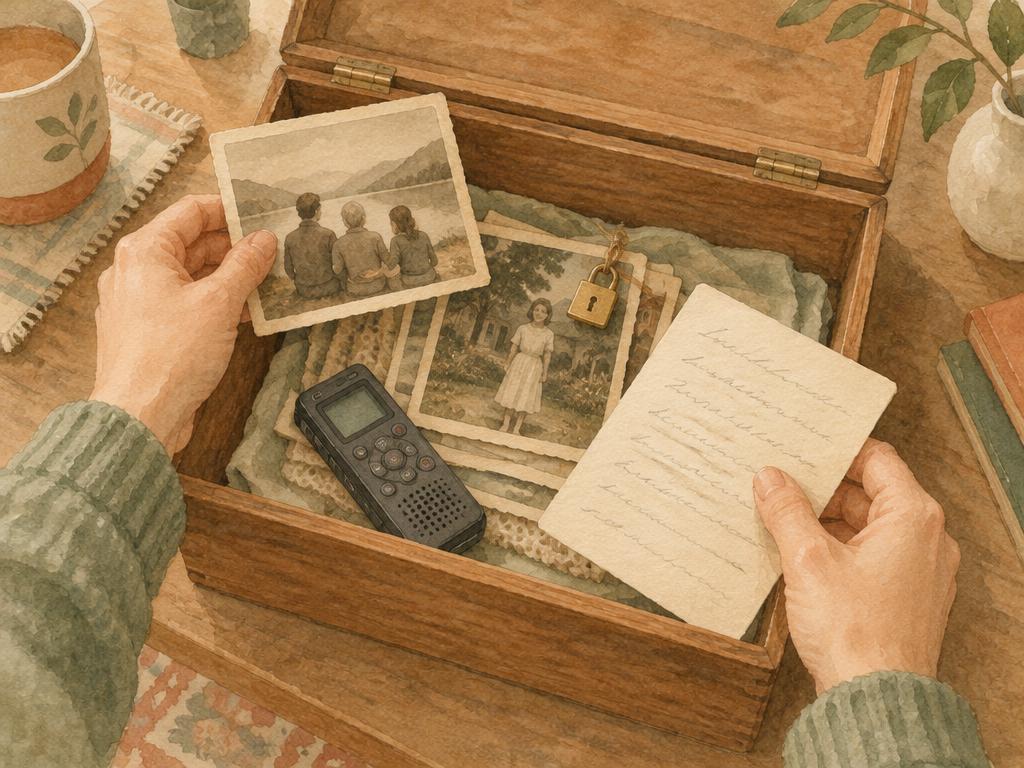
Step 2: You shareAdd photos, a voice note or a few words. Lock anything private. 
Step 3: Amy makes itAmy writes and paints every page, and asks if anything is unclear. 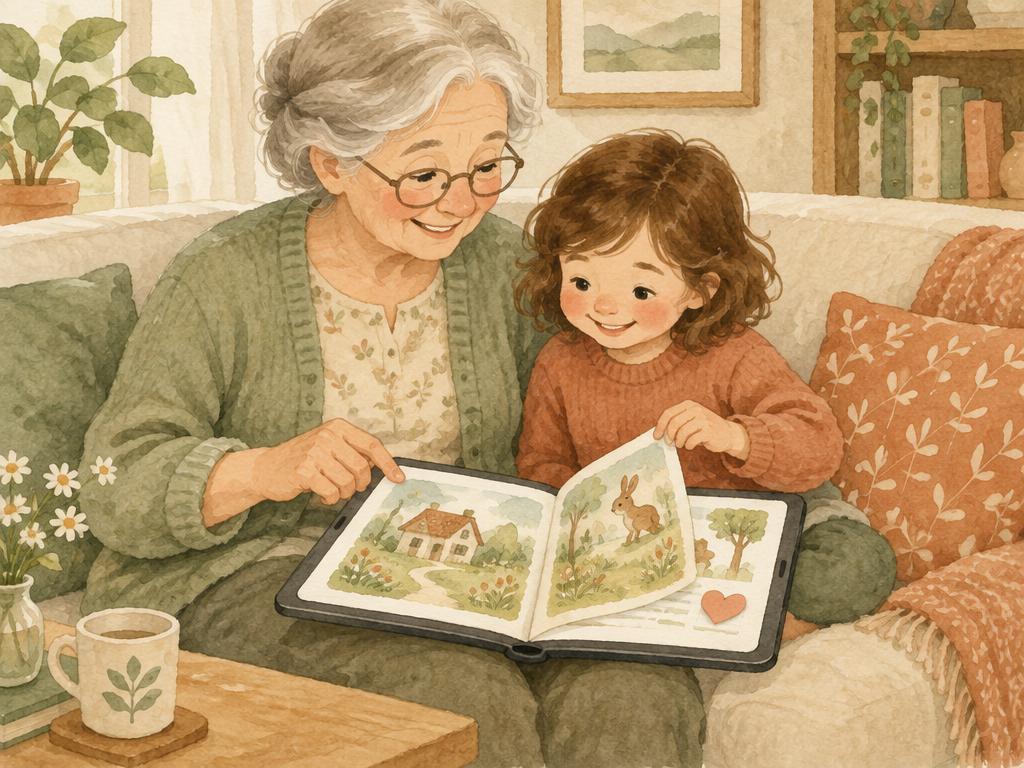
Step 4: You read it allTurn every page first. Leave a note on any page you'd like changed. 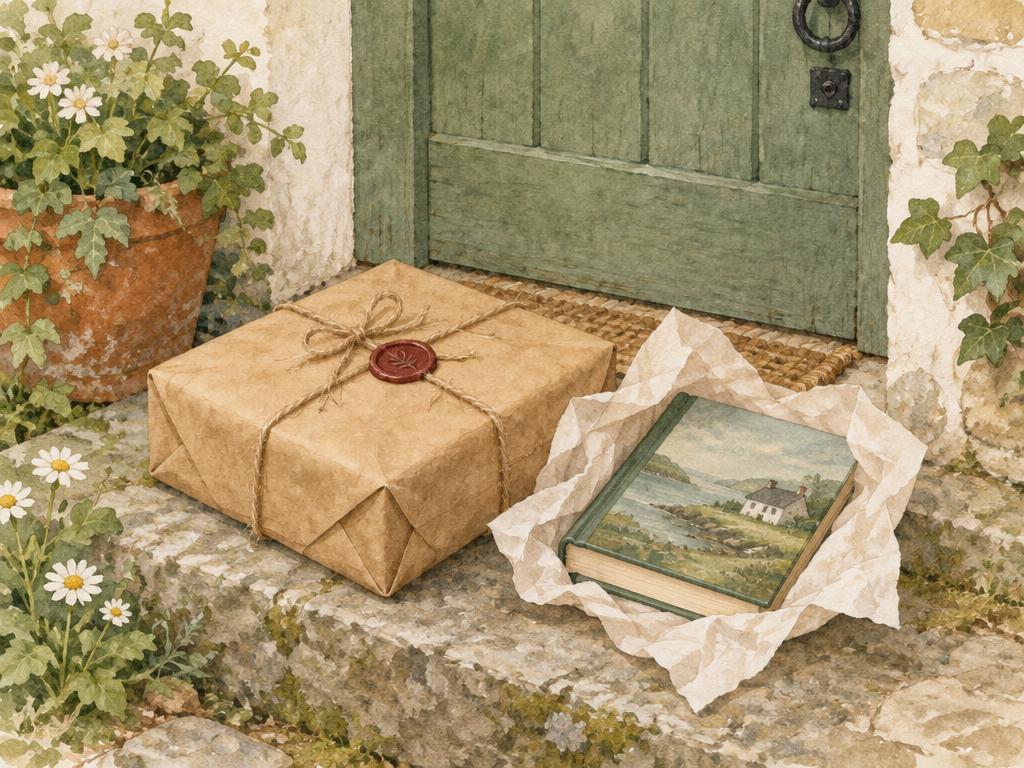
Step 5: It arrivesPrinted only once you say yes — then wrapped and posted to your door.
The detail, step by step
Step 1: You shape the story
Eight short chapters, answered in any order over as many sittings as you like. What kind of story it is, who is in it, the moments that matter, how it should feel, how it should end, and the shape of the book itself.
Step 2: You add what you have
Photographs, video, a recorded voice, or plain typed words. For each item you say whether it may appear in the book, whether it is background reference only, or whether it is private information for Amy. Nothing is used beyond the permission you set.
Step 3: You send it to Amy
You see exactly what is being sent before you send it, including a clear list of anything marked private. After that you can still add material, but changes are tracked so Amy always knows what she is working from.
Step 4: Amy reads it and asks
If something is unclear or too important to guess at, Amy asks a specific question with a note on why it matters. 'I'm not sure' is always an acceptable answer.
Step 5: Amy makes the book
Words, artwork, layout, cover. The result is a complete book: front cover, every interior page, back cover — not a sample and not a summary.
Step 6: You read the whole thing
The proof opens as a real book you can turn, zoom and read page by page. It can also be read as plain text and headings from top to bottom. You can leave a comment on any individual page.
Step 7: You approve, or you ask for changes
Ask for as many changes as you need. Each round produces a new version, and the previous versions stay available so you can see what changed.
Step 8: Then, and only then, it is printed
Your approval is attached to one exact version by its fingerprint. If a single page changes afterwards, that approval lapses and you are asked again.
What approval actually means
When you approve, the studio records which exact version you approved, the fingerprint of the book file and of its page-by-page manifest, how you reviewed it (as a book, as plain text, or both), and the wording of the statement you agreed to. That record is what allows the book to be printed.
If anything at all is changed after that — a word, a colour, a page order — the fingerprint no longer matches, the approval lapses automatically, and Amy must send you a new proof. Nobody can override that on your behalf.
If you need help along the way
You can ask someone to sit with you and help. If someone else fills a part in for you, the book records that assistance honestly — but only you can approve the book, and only after you have reviewed it.